How to Start a Makeup Private Label Business?
Table of Contents
- Define Your Makeup Private Label Business Model and Niche
- Research Customers, Products, Competitors, and Market Demand
- Create a Brand Identity, Product Range, and Pricing Strategy
- Select Manufacturers and Manage Product Development and Compliance
- Build Sales Channels, Launch Marketing, and Scale the Business
- FAQS
- Conclusion
- Related Posts
Launching a Makeup Private Label business begins with more than choosing attractive colors and printing a logo. It requires a clear customer, dependable formulas, compliant packaging, and a realistic financial plan. A founder might imagine a soft-matte lipstick in a beautiful rose-gold tube. The market may prefer a fragrance-free balm instead. That gap deserves attention.
The strongest brands usually begin with focused research. Study competitor prices, customer reviews, ingredient preferences, and underserved product needs. Then request samples from qualified manufacturers and compare texture, pigment, scent, wear time, and packaging durability. Test products on suitable volunteers under controlled conditions, while recording feedback honestly. Small details matter.
Compliance cannot be treated as decoration. Requirements differ by country and product category, including ingredient restrictions, labeling rules, safety assessments, batch records, and advertising claims. Work with experienced cosmetic professionals and verify supplier quality systems before placing an order. Ask about manufacturing standards, testing documentation, minimum order quantities, lead times, and recall procedures. Test everything.
Budget for formulation, samples, artwork, production, freight, storage, insurance, marketing, and unexpected revisions. Many new founders underestimate cash flow because the first order looks cheaper than the full launch. I have seen planning guides make this mistake by focusing on unit price alone. A practical launch may start with one strong product, not a crowded catalog. Keep learning, measure customer responses, and improve carefully. Credibility grows when promises match the product in the customer’s hand.
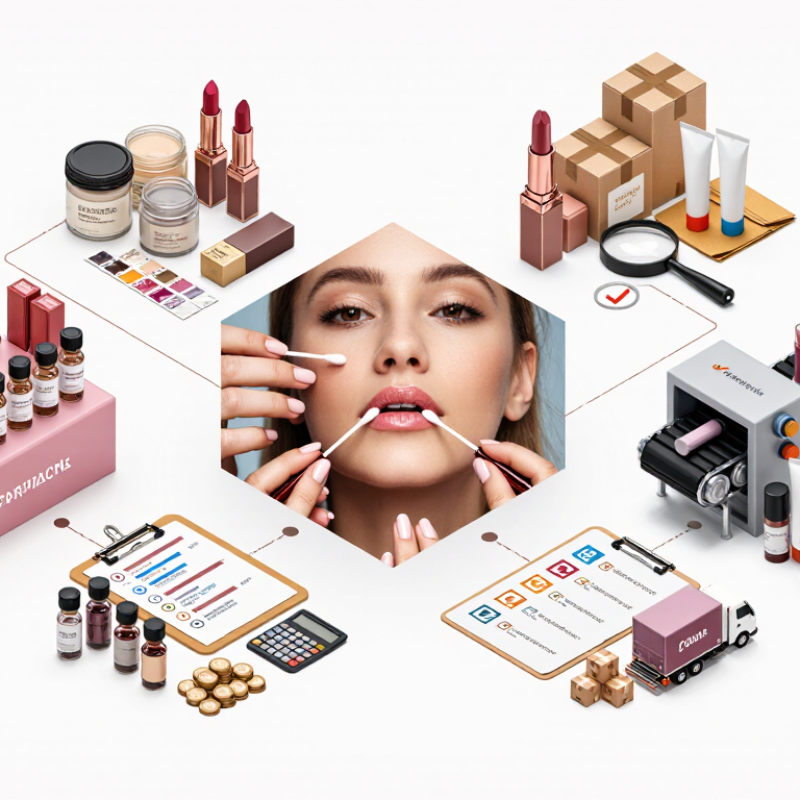
Define Your Makeup Private Label Business Model and Niche
How to Start a Makeup Private Label Business?
Define Your Makeup Private Label Business Model and Niche
A private label business starts with a clear operating model, not a product idea. Decide whether products will be made to stock, customized, or developed from scratch. Stock formulas usually require less capital and launch faster. Custom development offers stronger differentiation but needs testing, documentation, and larger minimum orders. Estimate manufacturing costs, packaging, freight, testing, storage, and returns before setting prices. A healthy margin can disappear quickly.
Your niche should solve a specific customer problem. Consider sensitive-skin makeup, minimalist routines, professional kits, or travel-friendly formats. Avoid targeting everyone. Study customer reviews, search behavior, and retailer feedback. Speak with potential buyers directly. Their wording may reveal useful product details, such as a soft applicator or a non-drying finish. Small details matter.
Keep claims accurate and supportable. Ask qualified manufacturers for ingredient lists, safety documents, stability information, and quality procedures. Check the rules in every market where the product will be sold. Requirements can differ by product type and location. Samples should be assessed for shade consistency, texture, packaging leaks, and wear performance. Do not trust one approval sample.
The first niche may be wrong. That is normal. Test a small range before committing to many shades. One practical mistake is treating attractive packaging as proof of demand. Customers usually return for reliable performance, clear information, and consistent quality. Avaliable feedback can still be incomplete, so review it carefully before changing the whole model.
Research Customers, Products, Competitors, and Market Demand
Starting a makeup private label business begins with evidence, not attractive packaging. Research the customer before choosing a formula. Interview working professionals, students, and sensitive-skin shoppers about routines, budgets, textures, and frustrations. Do not rely only on online polls. Watch how people compare shades in stores and read product reviews. A small spreadsheet can reveal repeated needs, such as transfer resistance or fragrance-free preferences. However, stated preferences do not always become purchases.
My first demand estimate was too optimistic. That mistake taught me to test behavior, not enthusiasm.
Study products in several price bands, then record shade range, ingredient lists, package size, claims, and customer complaints. Request complete supplier documents, including batch information, safety testing, stability data, and labeling support. Qualified cosmetic professionals should review claims and local requirements before selling. Never promise medical results.
Create a sample set with clear variables. Change one feature at a time, such as finish, applicator, or scent.
Give testers a defined use period and collect photos, usage notes, and repurchase intent. Feedback can be uncomfortable, but vague praise is not useful evidence.
Competitor research should examine more than price. Compare positioning, delivery speed, reviews, return policies, content quality, and customer service. Map underserved gaps, but avoid copying another company’s language or packaging.
Use search trends, marketplace data, retailer conversations, and small paid tests to estimate market demand. Run a limited production batch before committing to large inventory.
Track conversion rate, sampling cost, repeat interest, and unsold shades. Some results may conflict. A product can attract attention yet fail at checkout. Review the numbers weekly, and revise the product brief when real customer behavior disagrees with your assumptions.
Create a Brand Identity, Product Range, and Pricing Strategy
How to Start a Makeup Private Label Business?
A strong private label business begins with a clear brand identity. Define who you serve, where they use makeup, and what problem you solve. A simple identity is easier to remember than a crowded promise. Choose a practical tone, consistent colors, and packaging that feels comfortable in the customer’s hand. Your product claims must remain accurate, supported, and suitable for your target market. Review ingredient information, safety documents, labeling duties, and local cosmetic requirements with qualified professionals. Trust grows slowly.
Keep the first product range focused. Three to five complementary products can be easier to test, explain, and manage than a large collection. For example, you might develop a base product, a color product, and a daily-use finishing product. Request samples, check texture under different lighting, and record feedback from real testers. Skin feel matters. My early instinct would be to offer more shades immediately, but inventory risk can punish that decision. Learn from demand before expanding.
Build pricing from real costs, not hope. Include formulation, packaging, testing, freight, storage, platform fees, taxes, marketing, and possible product waste. Then compare your planned price with the value your customer can understand. A low price may reduce confidence, while an inflated price needs stronger proof. Use small production runs when possible. Track margin by product each month. Some costs will surprise you. Revise the range when the numbers, feedback, or quality checks reveal a better direction.
How to Start a Makeup Private Label Business? - Create a Brand Identity, Product Range, and Pricing Strategy
A practical planning framework covering market positioning, initial product selection, private-label development, unit economics, and launch performance targets.
| Business Area | Planning Dimension | Recommended Starting Point | Practical Data or Benchmark | Why It Matters | Action to Take |
|---|---|---|---|---|---|
| Brand Identity | Target customer | Choose one clearly defined customer group before selecting products. | Example: beauty consumers aged 18–34 seeking convenient, affordable everyday makeup. | A focused audience makes product design, content creation, and advertising more consistent. | Document customer needs, preferred price levels, shopping channels, and common product frustrations. |
| Brand Identity | Market position | Select one primary position: value, accessible premium, professional, clean-beauty, or trend-led. | One core position is easier to communicate than several competing messages. | Positioning influences packaging, formula choices, retail price, and customer expectations. | Write a one-sentence positioning statement that identifies the audience, benefit, and price tier. |
| Brand Identity | Visual system | Develop a consistent color palette, typography system, packaging style, and photography direction. | Use 2–4 primary colors and no more than 2 main typefaces for a consistent presentation. | Consistency helps customers recognize the brand across packaging, websites, and social media. | Create a basic brand guide covering logo use, colors, fonts, imagery, tone of voice, and packaging rules. |
| Brand Identity | Brand promise | Communicate one specific and supportable customer benefit. | Examples: easy application, long-wear performance, inclusive shade selection, or travel-friendly formats. | A specific promise is more credible than broad claims such as “the best makeup.” | Match every major claim with product evidence, testing records, or transparent ingredient information. |
| Product Range | Initial assortment size | Launch with a focused range rather than a complete cosmetics catalog. | Recommended starting range: 3–6 products or 6–12 total stock-keeping units, including shade variations. | A smaller range reduces inventory risk and makes quality control and marketing more manageable. | Prioritize products that share packaging components, manufacturing processes, or customer use occasions. |
| Product Range | Hero product | Choose one product to receive the majority of launch content and advertising attention. | Allocate approximately 40%–60% of launch content to the hero product during the first campaign. | A hero product gives the business a clear entry point and simplifies customer decision-making. | Select the item with the strongest customer benefit, visual appeal, repeat-purchase potential, or differentiation. |
| Product Range | Product mix | Combine an attention-generating item with practical repeat-use products. | Example mix: 1 hero product, 2–3 supporting products, and 1 complementary add-on. | This structure supports both customer acquisition and future cross-selling. | Design bundles around a use case, such as an everyday look, travel kit, or beginner routine. |
| Product Range | Shade strategy | Balance customer inclusivity with manageable inventory. | For complexion products, begin with a researched shade range and expand using sales and return data. | Too few shades may exclude customers, while too many low-volume shades can tie up cash in inventory. | Use customer research, undertone analysis, sampling, and sell-through data to guide future shade additions. |
| Product Range | Minimum order quantity | Negotiate the smallest commercially viable first order. | Private-label minimums vary widely; request written quotations from several qualified manufacturers. | Lower initial volume reduces the financial impact of weak demand or formula changes. | Compare minimum order quantity, sample fees, lead time, packaging options, testing, and payment terms together. |
| Product Range | Quality and compliance | Confirm that formulas, labels, packaging, and claims meet the rules of each target market. | Requirements differ by jurisdiction and may include ingredient labeling, safety assessment, responsible-party details, and product notifications. | Compliance problems can delay launch, increase costs, or lead to product withdrawal. | Obtain complete ingredient documentation and consult a qualified regulatory professional before selling. |
| Operations | Sampling process | Approve formula, shade, packaging, artwork, and finished-product samples before placing bulk orders. | Plan for multiple revision rounds instead of assuming the first sample is production-ready. | Sampling reduces the risk of receiving products that do not match the intended quality or appearance. | Use a written approval checklist covering color, texture, scent, fill weight, packaging fit, and print accuracy. |
| Operations | Lead-time planning | Build a launch calendar around manufacturing, testing, freight, customs, and inspection time. | Allow additional buffer time for packaging approval, production delays, and transport disruptions. | Launching without inventory or marketing assets can waste advertising spend and damage customer trust. | Set a target launch date only after confirming production capacity and realistic delivery milestones. |
| Pricing Strategy | Landed cost | Calculate the full cost of putting one sellable unit into inventory. | Landed cost = product cost + packaging + testing allocation + freight + duties + inspection + applicable fees. | Using factory cost alone can make an apparently profitable product unprofitable after delivery and compliance expenses. | Maintain a spreadsheet with cost assumptions and update it whenever supplier, shipping, or currency conditions change. |
| Pricing Strategy | Gross margin target | Set a margin that leaves room for marketing, fulfillment, returns, discounts, and overhead. | Many direct-to-consumer planning models target approximately 60%–75% gross margin before operating expenses. | Healthy gross margin provides flexibility for customer acquisition and promotional activity. | Review margin by product, channel, and promotion rather than relying only on the average business margin. |
| Pricing Strategy | Retail-price formula | Use cost-plus analysis together with competitor and customer research. | Illustrative formula: retail price = landed cost ÷ (1 − target gross-margin percentage). | The formula prevents underpricing while still requiring a market-based price check. | Test the proposed price against perceived value, comparable products, shipping cost, and expected discounting. |
| Pricing Strategy | Promotional budget | Include discounts and free-shipping offers in the financial model before launch. | Model at least three scenarios: full price, moderate promotion, and launch offer. | A product can appear profitable at full price but lose money when discounts and shipping are included. | Set a minimum contribution margin that promotions cannot reduce below without approval. |
| Pricing Strategy | Wholesale readiness | Prepare separate economics for direct-to-consumer and wholesale sales. | Wholesale pricing commonly requires a substantial discount from suggested retail price, depending on channel terms. | Retailer margins, payment terms, returns, and promotional allowances can materially change profitability. | Build a wholesale price list only after calculating production volume, freight, payment terms, and retailer requirements. |
| Launch Plan | Pre-launch validation | Collect feedback before committing to a large production run. | Use sample testing, waitlists, surveys, creator demonstrations, and small paid campaigns to compare demand signals. | Early feedback can reveal packaging, shade, price, or messaging problems before they become expensive. | Track sign-ups, sample preferences, content engagement, add-to-cart rate, and purchase intent by audience segment. |
| Launch Plan | Key performance indicators | Monitor financial, customer, and operational metrics together. | Core metrics: conversion rate, average order value, customer acquisition cost, gross margin, return rate, and sell-through rate. | Sales volume alone does not show whether the business is acquiring profitable customers. | Review performance weekly during launch and separate one-time launch effects from repeatable demand. |
| Launch Plan | Reorder decision | Reorder based on sales velocity, lead time, cash position, and forecasted demand. | Set a reorder point that covers expected sales during supplier lead time plus a safety-stock allowance. | Ordering too early locks up cash; ordering too late creates stockouts and lost customers. | Use a rolling demand forecast and distinguish stable products from seasonal or campaign-driven products. |
| Risk Management | Cash-flow reserve | Keep working capital available for inventory, freight, marketing, and unexpected revisions. | Prepare a cash-flow forecast covering at least the first 6–12 months of planned operations. | Profitable sales can still create cash shortages when inventory is paid before revenue is collected. | Model conservative sales, delayed delivery, higher freight costs, and slower inventory turnover. |
| Risk Management | Supplier diversification | Avoid relying on one supplier for every product or component where practical. | Maintain approved backup options for critical formulas, packaging components, or logistics services. | Supplier disruption, quality variation, or minimum-order changes can affect the entire launch. | Keep specifications, approved samples, test records, and artwork files organized for continuity. |
Planning note: Financial percentages and quantities are general planning benchmarks, not guarantees. Actual costs, minimum order quantities, product claims, labeling requirements, and margins depend on the formula, packaging, sales market, supplier, logistics route, and sales channel.
Select Manufacturers and Manage Product Development and Compliance
Starting a makeup private label business requires more than choosing attractive packaging. The manufacturer becomes part of your product team. I recommend checking their facility, quality systems, testing records, and communication speed. Ask for production samples, ingredient documentation, minimum order quantities, and realistic lead times. A polished website proves very little.
Product development should begin with a clear brief. Define the texture, shade range, finish, target user, package size, and expected shelf life. Request several samples and record every formula change. Test the product for stability, compatibility, microbial safety, and user experience. A foundation may look perfect under studio lights but separate after heat exposure. Small details matter.
Compliance must be planned before production. Review ingredient restrictions, labeling rules, claims, warnings, and required product files in every target market. Use qualified regulatory professionals when local requirements are unclear. Keep signed specifications, batch records, test reports, and supplier certificates organized. I once underestimated revision time because a label needed more space for mandatory information. That mistake delayed the launch. Build extra time into the schedule. Do not approve a formula only because it feels pleasant. Verify its safety, performance, and documentation. A dependable manufacturer welcomes careful questions and provides traceable answers.
Build Sales Channels, Launch Marketing, and Scale the Business
A makeup private label business grows when sales channels, marketing, and operations support each other. Start with one focused product category, such as tinted balm or pressed powder. Define the customer clearly: age range, preferred finish, price comfort, and daily routine. Request samples, inspect texture, check packaging, and record every formula revision. Reliable suppliers should provide ingredient documents, batch details, and safety information for the markets you target.
Build a simple sales path before ordering heavily. An online store can explain shades, ingredients, usage, and shipping times. Short videos can show the product under natural light, while email reminders can recover unfinished purchases. Test small quantities through pop-up events or professional makeup communities. Track conversion rate, repeat orders, refund reasons, and customer questions. Real feedback is more useful than compliments.
Marketing should solve a specific customer problem. Demonstrate coverage on different skin tones, show wear after several hours, and avoid unsupported claims. My early plan was too broad, and the message became forgettable. That mistake was expensive. Scale only after the best-selling shade, packaging process, and fulfillment routine are stable. Negotiate larger production runs carefully, keep reserve cash for delays, and review inventory weekly. A simple dashboard can reveal when advertising grows faster than profit. Test, measure, adjust.
FAQS
Interview professionals, students, and sensitive-skin shoppers about routines, budgets, textures, and frustrations. Watch shoppers compare shades in stores. Test behavior, not enthusiasm. My first demand estimate was too optimistic.
Record price, shade range, ingredients, package size, claims, delivery speed, and customer complaints. Review returns and customer service too. Price alone misleads.
Create samples with clear variables, such as finish, applicator, or scent. Change one feature at a time. Give testers a defined usage period. Collect photos, notes, and repurchase interest.
Request ingredient documents, batch information, safety testing, stability data, and labeling support. Qualified professionals should review claims and local requirements. Keep every revision recorded.
Start with one focused category, such as tinted balm or pressed powder. Use an online store to explain shades, ingredients, usage, and shipping times. Test small quantities through pop-up events or professional makeup communities.
Show coverage on different skin tones and wear after several hours. Use natural light in short videos. Address one specific customer problem. Avoid unsupported medical or performance claims.
Track conversion rate, sampling cost, repeat orders, refund reasons, customer questions, and unsold shades. Compare advertising costs with profit. Numbers disagree sometimes.
Scale after the best-selling shade, packaging process, and fulfillment routine remain stable. Negotiate larger runs carefully and keep cash for delays. Review inventory weekly. My early plan was too broad, and the message became forgettable.
Conclusion
Starting a Makeup Private Label business begins with choosing a clear business model and identifying a specific niche, such as everyday essentials, professional products, or solutions for particular customer needs. Conduct thorough research to understand your target customers, product preferences, competitors, pricing levels, and overall market demand. This foundation will help you create a focused product range that offers genuine value.
Next, develop a distinctive brand identity, including your brand message, visual style, packaging direction, and pricing strategy. Carefully select reliable manufacturers that can support product development, quality control, testing, labeling, and regulatory compliance. Once your products are ready, build suitable sales channels through online stores, retail partnerships, or other approved platforms. Launch with informative marketing content, customer-focused promotions, and consistent brand communication, then track sales and feedback to improve your products and gradually scale the business.
Blog Tags:
Scan to add WeChat