Featured Lip & Face Formulations for Turnkey Scale
High-performance production bases tested across micro-gravity filling, multi-axis dispersion, and long-wear stability. Selected standard models ready for immediate OEM/ODM adaptation.
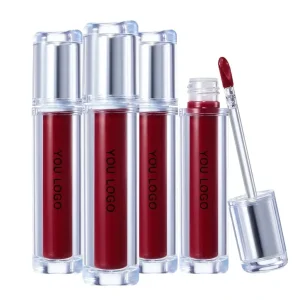
ODM Hyaluronic Acid & Collagen Lip Glaze
Explore Specification
ODM Hydro-Dynamic Skin Cleansing Oil
Explore Specification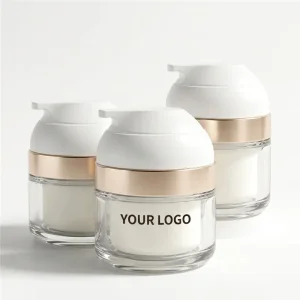
Custom Tinted Cream Moisturizer Base
Explore Specification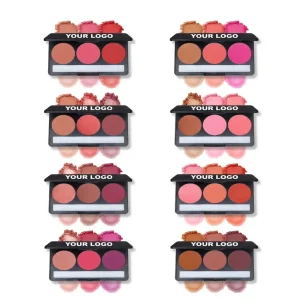
OEM Trio Color Baked Blush Palette
Explore Specification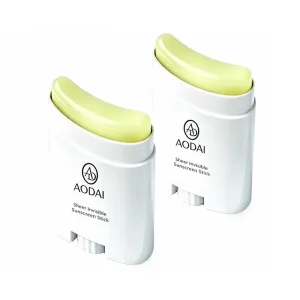
Sheer Invisible Sunscreen Stick SPF50+
Explore Specification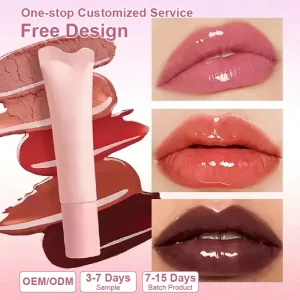
Customizable Vegan Waterproof Lip Gel
Explore Specification
Color-Locking Trio Blush Palette Factory
Explore Specification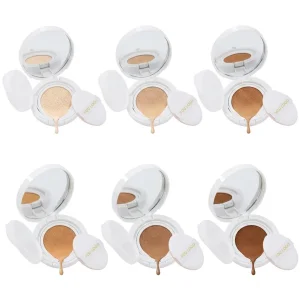
Flawless Coverage Cushion Foundation
Explore SpecificationThe Commercial Landscape of Mini Lipstick Contract Manufacturing
How travel-size lip bullets shifted from promotional novelties to high-margin direct-to-consumer (DTC) collection anchors, reshaping cleanroom tooling and thermal crystallization workflows.
Micro-Sizing & High Gross-Margin Yield
In standard 3.5g lipsticks, active ingredient pricing and secondary bulk containers comprise up to 45% of total bill of materials (BOM). Miniature lipsticks (ranging from 1.0g to 1.8g) dramatically alter this ratio. By delivering prestige textures in scaled-down profiles, cosmetic brands achieve up to 3.2x higher retail markup per gram of poured formula while lowering trial friction across beauty counters and e-commerce baskets.
The "Sampling Economy" Disruption
Modern Gen-Z and millennial beauty consumers rarely exhaust a full-sized bullet before shelf expiration. The commercial rise of multi-shade vault sets, advent calendar capsules, and monthly subscription boxes (e.g., Sephora Favorites, IPSY) has established the custom mini lipstick as a standalone industrial SKU rather than a secondary sample format, driving multi-million unit factory volume requirements.
Stringent Cleanroom Micro-Tooling
Pumping viscous lipid-wax mixtures into miniature cavities (diameters from 7.0mm to 9.5mm compared to industry-standard 12.1mm or 12.7mm cups) imposes severe fluid dynamics challenges. Leading factories deploy pressurized positive-displacement hot nozzles and cryogenic demolding chambers to prevent micro-air entrapping, surface cratering, and post-demolding tip shear.
Engineering Roadmap: Micro-Molding & Thermodynamic Rheology
Shrinking a lipstick bullet requires fundamentally altering structural wax matrices. Below is the comprehensive formulation and tooling architecture deployed inside our automated facilities.
| Engineering Parameter | Standard Bullet (12.1mm Cup) | Mini Bullet (8.5mm - 9.0mm Cup) | Aodai Patented Micro-Factory Standard |
|---|---|---|---|
| Crystallization Rate | Gradual gradient (2.5°C / min) | Rapid surface quenching risk | Multi-stage induction cryogenic cooling (-8°C to +4°C) |
| Microcrystalline Wax Ratio | 8.0% - 12.0% w/w | Must exceed 14.5% w/w | 15.8% microcrystalline + synthetic ozokerite cross-matrix |
| Drop Point (Mettler Method) | 68.0°C - 74.0°C | 72.0°C - 78.0°C (prevent pocket softening) | 76.5°C ± 1.0°C verified drop point |
| Demolding Friction Coefficient | μ = 0.18 - 0.22 (Silicon spray) | μ < 0.10 (Severe vacuum pull risk) | Aviation-grade mirror-polished brass or PTFE-coated molds |
| Shear Deflection Threshold | 3.8 N·cm at 25°C | 1.8 N·cm (Critical break threshold) | Reinforced flexural core engineered up to 3.2 N·cm |
1. Overcoming the "Slender Ratio" Fracture Problem
In micro-manufacturing, bullet length-to-diameter aspect ratio often exceeds 3.5:1. Without specialized formulation adjustments, standard shearing forces applied during client application cause immediate transverse fractures at the cup rim. Our R&D team addresses this via higher-melting-point branched hydrocarbons, high-viscosity polybutene polymers, and surface-treated pigments that reinforce mechanical tensile strength without yielding drag on delicate lips.
2. Sub-Millimeter Swivel Mechanism Engineering
A miniature shell requires tighter component tolerances than conventional casings. Spiral track guides, inner sleeves, and A-shell clearances must maintain tolerances within ±0.03mm. Insufficient clearance leads to mechanical lockup, while excessive clearance causes bullet tilt and scraping against the inner wall during extension. Aodai employs automated torque validation machines to ensure uniform turning resistance between 150 to 300 g·cm.
Omnichannel & Localized Market Applications
Strategic commercial placement models engineered to optimize inventory turnover, expand shade exploration, and fit localized demographic consumer habits worldwide.
Travel Retail & In-Flight Kits
Airport duty-free retail hubs demand curated multi-finish travel kits that comply with strict carry-on volumetric standards. Aodai engineers custom 3-piece and 5-piece mini lipstick sets pairing hydrating balms, satin daily tints, and high-impact velvet mattes in luxury acrylic and metallic secondary sleeves tailored for cross-border duty-free retail buyers.
Gen-Z "Micro-Bag" Pocket Beauty
The global fashion migration toward miniature luxury bags has rendered traditional 80mm bulky lipstick tubes obsolete for evening and club wear. Pocket-sized mini bullets (50mm - 60mm length) meet the urgent consumer demand for clutch-ready touch-ups without sacrificing formula payoff, luxurious case weight, or magnetic closure tactile feedback.
Seasonal Vaults & Holiday Calendars
Beauty brands leverage custom mini lipstick factories to assemble 12-to-24 shade holiday countdown boxes. Miniaturization allows marketing directors to offer an extensive shade spectrum—from gothic plums to nude ochres—at consumer-accessible price points, generating massive social media unboxing virality during Q4 shopping seasons.
Macro Industry Solutions: Guangdong Aodai Factory Capabilities
Operating alongside Oulilai Group's Huadu R&D center, our 70,000 m² Qingyuan intelligent base resolves core B2B supply chain risks through automated precision and vertically integrated tooling.
30+ Automated Lines & Cleanroom Filling
Equipped with 30+ automated cosmetic assembly and micro-filling lines operating within Class 100,000 cleanrooms. High-speed multi-nozzle pneumatic dispensers deposit bulk at temperature-controlled states (±0.5°C), preventing surface skinning, nozzle dripping, and batch volume variations.
60+ Granted Patents & Doctoral Workstations
Our dual R&D campus combines university-partnered doctoral workstations with 50+ experienced cosmetic chemists. Holding over 60 granted patents across emulsification, film-forming matrices, and long-wear pigment encapsulation, we engineer mini lipsticks that avoid drying and shrinkage.
5,000+ Validated Formula Architectures
Bypass formula reformulation delays. Access an exhaustive library of 5,000+ stable, market-tested color cosmetic bases spanning sheer luminous balms, plumping glosses, transfer-proof velvet mattes, and pH-reactive tint formulas, fully compliant with FDA, EU REACH, and ASEAN directives.
Flexible Low MOQ to Enterprise Scaling
Eliminating high barrier-to-entry thresholds. We offer agile low-MOQ pilot programs leveraging pre-tooled stock mini mechanisms, allowing emerging indie brands to validate formulas before seamlessly scaling into automated runs of 500,000+ units per month.
Eco-Forward Mono-Material & PCR Tooling
Meeting global ESG requirements. We fabricate lightweight mini lipstick casings using Post-Consumer Recycled (PCR) plastics, mono-material Polypropylene (PP) and Polyethylene (PET) structures, as well as refillable aluminum outer shells designed to satisfy European packaging waste rules.
Full-Chain International Certification
Audited and certified by FDA, ISO 22716, GMPC, SEDEX, SGS, and Intertek accredited bodies. Every production batch is backed by full raw material traceability from origin to shipping container, complete with real-time stability, microbial, and heavy metal testing documentation.
Specialty High-Pigment & Hybrid Formulation Line
Complementary private label bases engineered to pair seamlessly with your mini lip launch, covering full-coverage complexion creams, multi-sticks, and hybrid jelly formats.
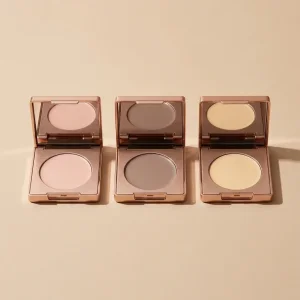
High-Coverage Matte Concealer Cream
Explore Specification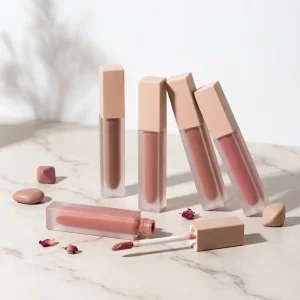
Skin-Tone Friendly Velvet Hydrating Stick
Explore Specification
ODM Dual Use Multi-Pigmented Lip/Cheek Tint
Explore Specification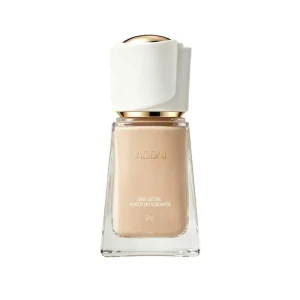
48H Long-Lasting Sunscreen Foundation
Explore Specification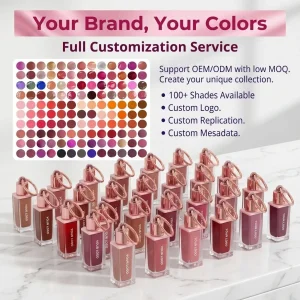
OEM Pocket Keychain Plumping Lip Gloss
Explore Specification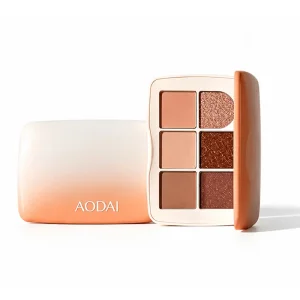
Air-Spun Multicolor Eyeshadow Palette
Explore Specification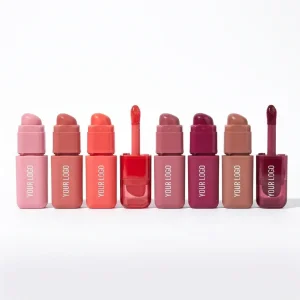
2-in-1 Creamy Jelly Lip Oil & Gloss
Explore Specification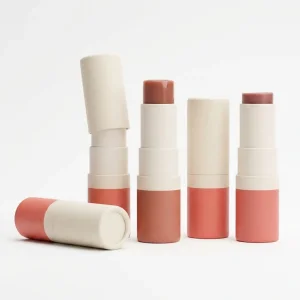
Phase-Shift Instant Melt Juicy Tinted Balm
Explore SpecificationBuyer Questions Answered by Cosmetic Formulation Engineers
Precise chemical, mechanical, and logistical guidance for procurement directors, product developers, and brand founders seeking contract manufacturing partners.
Why do miniature lipsticks require higher flexural strength than standard bullets?
Standard lipstick bullets possess a diameter of 12.1mm to 12.7mm, granting a wide structural core capable of absorbing vertical and shear application stress. A custom mini lipstick bullet narrows this caliber down to 7.0mm - 9.0mm. According to structural beam deflection equations, transverse mechanical strength decreases proportionally with the cube of the radius. If a formula uses conventional wax balances, the bullet snaps cleanly at the plastic bezel line during application. Aodai counters this physical limitation by structuring high-tensile microcrystalline waxes and synthetic wax cross-polymers that elevate the bullet's lateral flexural resistance up to 3.2 N·cm without elevating drag resistance on lips.
What is the typical Minimum Order Quantity (MOQ) for custom mini lipsticks?
MOQs depend primarily on packaging component tooling. If our brand partners select existing stock molds from our vast component warehouse (available in classic matte black, metallic silver, or clear acrylic formats), our minimum batch starts at just 3,000 to 5,000 units per shade. If the brand requires custom injection-molded casings, unique bespoke outer embossing, custom logo mold stamping, or proprietary pantone plastic dyeing, the standard tooling threshold is typically 10,000 to 20,000 units per production run.
How does Aodai eliminate surface voids, pinholes, and crystallization frosting?
Surface frosting and core micro-voids happen when liquid bulk is rapidly chilled in contact with cold metal mold walls, creating a thermal shock differential between the freezing outer skin and molten interior. Our automated pouring lines utilize dual-jacketed positive-displacement dosing tanks that maintain continuous recirculating heat. Molds pass through an intelligent multi-stage thermal gradient tunnel: gentle initial tempering (+45°C), followed by controlled cryogenic induction (-8°C), and finally humidity-controlled post-conditioning. This eliminates surface cavitation, sink-holes, and wax blooming completely.
What global cosmetic regulatory compliance standards are supported?
Guangdong Aodai Cosmetics Co., Ltd. operates in full compliance with international regulatory frameworks. All raw materials sourced from tier-one global suppliers carry complete Safety Data Sheets (SDS), Certificates of Analysis (COA), and IFRA-compliant fragrance certificates. Our manufacturing campus is strictly certified under FDA GMPC (US) and ISO 22716:2007 (Cosmetics GMP). Formulas destined for the European Union strictly exclude all Annex II prohibited substances, comply with Regulation (EC) No 1223/2009, and are delivered ready with Product Information Files (PIF) for EU Safety Assessors.
Can you provide custom shade-matching and benchmark reverse engineering?
Yes. Leveraging our spectrophotometric color-matching laboratories and doctoral workstation researchers, clients need only send a physical benchmark target (or Pantone PMS / CMYK reference). Our chemists accurately map pigment loads, iron oxide dispersions, lake dyes, and organic mica ratios to replicate color payoff under D65, A, and TL84 standard light sources with a Delta-E color variation tolerance of less than 0.8. We can also adjust skin feel—modifying glide from velvet matte to glossy high-shine.
What is the standard production timeline from concept brief to finished port loading?
Standard OEM/ODM production cycles run as follows: Initial formula benchmark matching and initial lab swatches require 5 to 7 working days. Once the client confirms lab submissions, 30-day thermal stability (at 45°C, 4°C, and room temperature cycling) is completed alongside challenge tests. Packaging production (custom printing, metallization, silkscreening) takes 25 to 30 days. Final automated bulk batching, cryogenic micro-molding, assembling, shrink-wrapping, and export carton palletizing is completed in 10 to 15 days.
 Scan to add WeChat