High-Performance Color Cosmetics & Base Formulations
Production-ready formulas engineered in our Class 100,000 cleanroom facilities. Fully customizable across pigment loads, sensory finishes, packaging molds, and global regulatory frameworks.
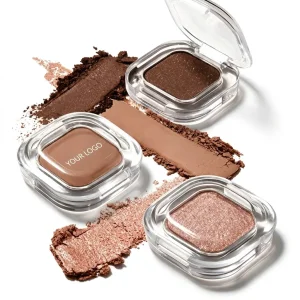
The Global Strategic Status of China Blush Manufacturing
A comprehensive examination of how Chinese cosmetic contract manufacturers transitioned from mass commoditization to high-tech, precision micro-milled formulations and globally compliant cosmetic supply chains.
Global Market Centralization
Over 60% of color cosmetic pan fills and cream-to-powder units globally originate within the specialized cosmetic manufacturing corridors of South China. Guangdong's vertical ecosystem provides instant access to premium synthetic fluorphlogopite, surface-treated iron oxides, and precision compact tooling, allowing global brands to achieve unmatched speed-to-market.
Technological Modernization
The contemporary Chinese ODM landscape has replaced manual pan filling with automated pneumatic press systems, wet-slurry back-injection, and high-shear dispersion mixers. Facilities like Guangdong Aodai leverage doctoral workstations to formulate advanced hybrid textures that combine skincare actives with high-impact cheek pigmentation.
Stringent Clean Compliance
Meeting Western regulatory criteria is no longer an afterthought. Modern Chinese blush factories operate under strict ISO 22716 and US FDA MoCRA compliant environments. Formulation libraries are systematically audited against heavy metal tolerances, talc asbestos screening protocols, and global clean-beauty restricted substance lists (RSL).
Information Gain Insight: While legacy European contract manufacturers historically dominated the luxury pressed-powder market via artisan baking techniques, modern Guangdong factories have successfully automated wet-slurry injection molding. This delivers identical luminous marbling and zero-fallout payoff at one-fourth of European tooling lead times and 40% lower overall cost of goods sold (COGS).
Why Tier-1 Beauty Brands Source Blush from China Factories
Evaluating industrial verticalization, automated throughput metrics, and speed-to-market advantages delivered by Guangdong Aodai Cosmetics Co., Ltd. and the Oulilai Group infrastructure.
Vertical Industrial Clustering
Within a 50-kilometer radius of our Qingyuan and Huadu manufacturing hubs, we source custom aluminum pans, injection-molded PCR compacts, holographic stamping foils, and raw pigment dispersions. This eliminates international component shipping bottlenecks and shortens sampling cycles from 8 weeks to 72 hours.
Automated Servo Press Consistency
Manual pressing yields inconsistent hardness and uneven product pickup. Our 30+ fully automated lines utilize multi-stage servo hydraulic compression. Pan surface hardness is maintained at a precise penetration tolerance (±0.2mm), ensuring standardized shatter-resistance and consumer pickup consistency across multi-million unit batches.
Agile Formula Library Scalability
With over 5,000 mature formulations in our laboratory databases and 60+ proprietary patents, brands can bypass early-stage formulation R&D failure risks. Pre-validated base matrices (baked, cream, stick, powder, serum) allow instant shade adaptation, lowering initial pilot risks and scaling to full commercial production in 28 days.
Formulation Architectures: From Baked Powders to Skincare Hybrids
A technical guide to raw material selections, sensory rheology, and localized climatic performance optimization for global export markets.
| Blush Format | Core Chemistry & Binder Matrix | Pigment Loading | Sensory Finish | Target Export Climate / Market Adaptability |
|---|---|---|---|---|
| Continuous Baked Blush | Slurry suspension, synthetic fluorphlogopite, squalane binder, slow radiant baking | 15% - 25% coated pearls | Luminous, dimensional glow | Global Luxury DTC: Resists high humidity without glazing over in humid EU/US summer retail environments. |
| Velvet Matte Pressed Powder | Boron nitride, amino-acid treated sericite mica, magnesium myristate, silicone crosspolymers | 20% - 35% micro-pigments | Soft-focus blur, non-chalky matte | Inclusive Global Range: Broad shade spectrum engineered for Fitzpatrick scale I–VI without ashy undertones. |
| High-Pigment Cream-to-Powder | Caprylic/capric triglyceride, microcrystalline wax, synthetic wax, silica sphere absorbents | 18% - 28% micronized iron oxides | Melting cream setting to powder veil | Middle East & Latin America: High heat stability (retains integrity at 45°C) and sebum-resistant sweat proofing. |
| Multi-Use Cheek & Lip Stick | Plant-based squalane, shea butter, candelilla wax, volatile hydrocarbon alternatives | 12% - 20% organic lake dispersions | Dewy, glass-skin skin tint | North American Clean Beauty: 100% vegan, clean at retail compliance, effortless on-the-go application. |
| Serum / Water-Infused Liquid Blush | Bi-phase water-in-oil emulsion, sodium hyaluronate, glycerin, suspended micro-lake pigments | 8% - 15% liquid color dispersion | Weightless, hyper-natural flush | Southeast Asia & East Asia: Ultra-lightweight, non-comedogenic hydration suitable for tropical humidity. |
Skin Tone Inclusivity Formulation
Exporting blush worldwide demands precision undertone balancing. In Western markets, pigments must deliver high saturation on deep complexions (Fitzpatrick V & VI) without relying on titanium dioxide fillers that cause ashiness. Our doctoral workstations utilize surface-treated red iron oxides, D&C red lakes, and transparent mica coatings to achieve pure color fidelity across all demographic cohorts.
Climate-Specific Thermal Rheology
A cream blush formulated for Northern Europe will melt and sweat during transport to the UAE or Brazil if the wax matrix is uncalibrated. Aodai balances branched microcrystalline waxes with high-melting-point plant waxes (Carnauba and Candelilla) alongside volatile isododecane carriers to ensure zero oil migration up to 48°C while maintaining immediate glide upon contact with human skin warmth.
Talc Replacement Technologies
With North American and EU retail mandates increasingly restricting talcum powder, our factory engineers have mastered synthetic fluorphlogopite, corn starch octenylsuccinate, and silk sericite mica alternatives. These non-talc bases achieve equivalent spreadability, higher luminous purity, and undergo rigorous XRD testing for asbestos clearance.
Emerging Trends Shaping the Future of Color Cosmetics
Strategic directions for 2025–2030 product roadmaps: integrating active bio-actives, circular packaging mechanisms, and automated visual shade intelligence.
Cleanical Skincare-Makeup Hybrids
Modern consumers demand active dermatological efficacy within color cosmetics. Aodai seamlessly integrates micro-encapsulated niacinamide, bakuchiol, sodium hyaluronate crosspolymers, and biomimetic ceramides into powder and liquid blush matrices. Our micro-fluidization technique ensures that active ingredients remain stable and non-reactive with mineral iron oxides over extended 36-month shelf lives.
Mono-Material & Refillable Packaging
Global extended producer responsibility (EPR) regulations demand zero-waste designs. Our tooling facilities manufacture pure mono-material Polypropylene (PP) and PET compact cases with snap-out refill mechanisms that completely eliminate glue, secondary magnets, and mixed metals, ensuring 100% curb-side recyclability for EU and North American retailers.
AI-Assisted Spectral Color Duplication
Leveraging high-precision spectrophotometers and computer-assisted pigment dispensing systems, our lab can benchmark any global competitive SKU and duplicate color delta values (ΔE) to within less than 0.5. This guarantees that your brand can replicate seasonal runway shades or TikTok viral swatches with unerring accuracy and rapid ramp-up.
Microplastic-Free Spherical Blurring
As EU regulations ban synthetic polymer micro-particles (such as nylon-12 and PMMA beads), our labs have developed natural functional texturizers using silica microspheres, cellulose beads, and rice starch derivatives. These bio-based texturizers deliver identical ball-bearing lubricity, oil control, and optical line-blurring without environmental persistency.
Global Enterprise Sourcing: Navigating OEM, ODM & OBM
A strategic breakdown for procurement directors, beauty founders, and supply chain managers evaluating Chinese contract manufacturing partners.
OEM: Custom Technical Filling
Designed for established cosmetic houses that maintain internal formulation IP. You supply the formula specifications, active raw materials, or primary packaging components, and Aodai provides high-precision cleanroom bulk manufacturing, automated pressing, and QA verification under tight non-disclosure agreements.
ODM: Full Turnkey Development
Ideal for fast-scaling indie brands and retail private labels. We handle formulation adaptation from our 5,000+ base library, secondary component tooling, packaging custom printing, compatibility testing, stability trials, and export documentation preparation. You receive retail-ready, finished cosmetic units.
OBM: Market-Proven Programs
For large-scale retail distributors and cross-border e-commerce networks requiring immediate catalog deployment. Aodai provides fully validated, trending cosmetic product lines with established stability test histories, pre-cleared packaging options, and immediate bulk container filling capacity.
| Evaluation Parameter | Tier-1 Factory Standard (Aodai Model) | Generic Commodity Supplier | Buyer Risk Factor |
|---|---|---|---|
| Cleanroom Certification | Class 100,000 / ISO 22716 / US FDA GMPC Certified | Uncertified or local baseline workshop | Microbial contamination, import seizure by US FDA or EU authorities. |
| Stability & Compatibility | 3-month multi-temp stress (-15°C to 50°C), centrifuge & drop test | Visual assessment only or omitted | Product sweating, compact cracking, formula oil separation during sea freight. |
| Heavy Metal & Asbestos Screening | Batch-level ICP-MS analysis; guaranteed zero asbestos in talc/mica | Generic raw material COA without third-party validation | Severe consumer health liability, recall costs, and brand reputation loss. |
| Tooling & Mold Control | In-house 3D CAD rapid prototyping and custom pan tooling | Brokered tooling via third-party workshops | Extended lead delays, poor compact closure snap-fit, pan loosening. |
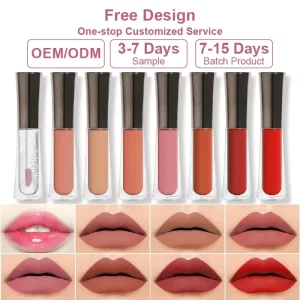
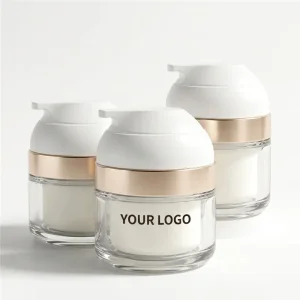
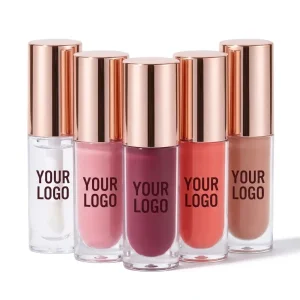
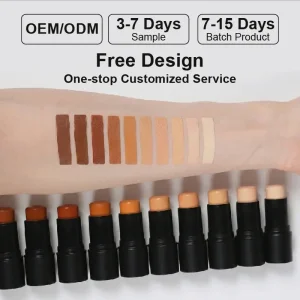
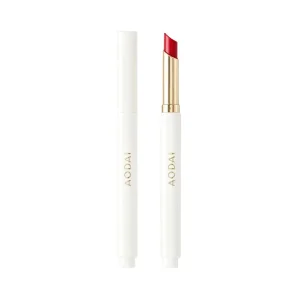
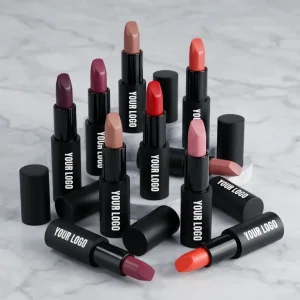
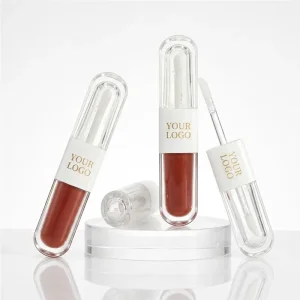
End-to-End Face & Lip Cosmetic Solutions
Explore additional turnkey formulations manufactured within our integrated South China industrial base. Fully customizable under private label contracts.
Frequently Asked Questions: B2B Sourcing & Quality Engineering
Direct technical answers from Guangdong Aodai's formulation directors and supply chain operations teams.
What is the typical Minimum Order Quantity (MOQ) for custom ODM blush?
Our standard production baseline begins at 3,000 to 5,000 units per shade when utilizing factory-stocked primary compact packaging components. If your project requires custom injection mold designs, proprietary tooling dimensions, or specialized PCR materials, the initial packaging tooling run generally begins at 10,000 to 12,000 units. For pilot brand launches, our catalog contains low-MOQ programs that lower entry barriers.
How does your factory handle heavy metal and raw material safety documentation?
Every incoming raw pigment lot undergoes rigorous Inductively Coupled Plasma Mass Spectrometry (ICP-MS) screening to verify compliance with US FDA, EU EC 1223/2009, and ASEAN limits for Lead (<10ppm), Arsenic (<2ppm), Mercury (<1ppm), and Cadmium (<5ppm). All mineral micas and talc substitutes are certified 100% asbestos-free via X-ray Powder Diffraction (XRD). We deliver complete Certificate of Analysis (COA), Safety Data Sheets (SDS), and ingredient origin tracing per lot.
Can Aodai duplicate an existing benchmark blush texture and color?
Yes. Our laboratory houses over 50 formulation chemists equipped with automated spectrophotometers, high-pressure liquid chromatography (HPLC), and rotational rheometers. If you supply a commercial benchmark SKU, our R&D team analyzes its binder ratio, pigment surface treatment, particle size distribution, and optical chromaticity (L*a*b* coordinates), delivering an initial match sample within 5 to 7 business days with a color discrepancy rating (ΔE) under 0.5.
What stability tests are completed before mass production scale-up?
All approved blush formulas undergo a structured 90-day accelerated stability cycle inside controlled environmental chambers. Conditions include constant 45°C/75% RH, thermal shock cycling (-10°C to 48°C alternating every 24 hours), real-time UV exposure (photostability), and mechanical drop testing (standard 1-meter drop onto concrete surfaces to verify pan cake structural integrity). We also execute direct formula-to-package compatibility checks to ensure no migration or plastic softening occurs.
What export compliance dossiers do you provide for FDA MoCRA and the EU CPNP?
We provide full regulatory dossier packages prepared by certified toxicologists. This includes complete quantitative and qualitative (Q&Q) ingredient breakdowns with INCI nomenclatures, CAS numbers, Heavy Metal & Microbiological Challenge Test Reports (USP 51 / ISO 11930), Product Information Files (PIF) for the European Union CPNP notification, and FDA Cosmetic Product Listing support under the modern US MoCRA regulations.
What is the standard production lead time from lab approval to seaport departure?
Upon final sign-off of the Golden Sample (shade match and packaging artwork proof) and deposit confirmation: stock packaging programs require 25 to 30 operational days for bulk mixing, pressing, assembly, and automated carton packing. Customized packaging involving newly opened mold cavities, custom hot-stamping, or electroplated metallization typically requires 40 to 45 operational days. Expedited production lanes are available for contracted enterprise volume reorders.
 Scan to add WeChat