Top-Performing OEM/ODM Cosmetics Formulations
Market-tested, high-stability color cosmetic solutions engineered for rapid private label customization and international compliance.
R&D Engineering & Rheological Dynamics in Lip Cosmetics
A Comprehensive Technical Guide for Beauty Procurement Executives, Brand Founders, and Formulation Chemists
Lipstick Crystalline Matrix Optimization
Traditional bullet lipstick development hinges on the precise equilibrium between structural crystalline waxes and non-crystallizing liquid esters. High-performance ODM manufacturing requires engineering a thermo-stable lattice structure that withstands high ambient storage (up to 45°C) without oil-bleeding (sweating), while maintaining a low melting threshold upon contact with lip skin shear stress. By combining high-melting microcrystalline and ozokerite waxes with natural botanical alternatives such as certified organic Carnauba (*Copernicia prunifera*) and Candelilla (*Euphorbia cerifera*), state-of-the-art ODM facilities achieve hardness profiles between 40g to 75g (measured via needle penetrometer) alongside instantaneous payoff efficiency.
Thixotropic Flow & Glass-Lip Gloss Rheology
Modern consumers demand high-shine lip glosses that offer a 3D glass-like cushion finish without unpleasant tackiness or stringy transfer. This sensory balance is governed by thixotropic rheology control. Through high-shear polymer dispersion—utilizing hydrophobic silica, silicone-elastomer networks, and specific molecular weight ratios of Polybutene and Hydrogenated Polyisobutene—ODM labs formulate glossy bases that demonstrate shear-thinning behavior. Under applicator brush stress, viscosity drops rapidly for effortless spreading; upon application, viscosity recovers instantaneously to seal color, smooth lip lines, and deliver long-lasting, high-refractive-index shine.
Guangdong Industrial Cluster & Smart Manufacturing Dominance
Why Tier-1 Global Beauty Brands Leverage Integrated OEM/ODM Ecosystems in South China
Fully Integrated Raw Material Sourcing
Guangdong's cosmetics manufacturing corridor hosts the world's most concentrated supply chain for high-grade synthetic fluorphlogopite, specialty esters, bio-fermented active oils, and sustainable mica. Direct physical proximity reduces raw material procurement lead times from weeks to hours, allowing rapid formula iteration and competitive COGS (Cost of Goods Sold) optimization.
Automated Robot-Controlled Filling
Modern production facilities utilize Class 100,000 cleanroom environments equipped with automated hot-pour lipstick molding machines, freezing tunnels, and pneumatic lip gloss dosing systems. High-precision volumetric filling eliminates micro-air bubbles and guarantees ±0.05g weight accuracy across massive production runs exceeding 500,000 units per day.
Precision Component Engineering
From airtight magnetic bullet closures to custom silicone doe-foot applicators and zero-leakage gloss wipers, China’s tooling and packaging engineering capabilities enable bespoke structural designs. In-house mold creation drastically reduces custom component development timelines from 90 days down to 21 days.
Global B2B Buying Strategies: Overcoming Supply Chain Bottlenecks
Evaluating Total Cost of Ownership (TCO), MOQ Flexibility, and Risk Mitigation for Brand Owners
Turnkey ODM vs. Custom OEM Sourcing
Global procurement teams must navigate the strategic trade-off between speed-to-market and proprietary formulation exclusivity:
- Turnkey ODM Solutions: Ideal for rapid commercialization. Utilizes pre-tested, stability-proven formula bases paired with stock componentry. Reduces launch timelines to 30–45 days while lowering initial capital expenditure.
- Custom OEM R&D: Tailored for established beauty houses seeking unique point-of-difference (POD) claims. Involves bespoke viscosity, custom fragrance integration, proprietary active infusion (e.g., lip-plumping peptides, ceramides), and exclusive packaging tooling.
Mitigating Quality Discrepancies & Batch Drift
The primary pain point in international beauty sourcing is color variance and viscosity drift between pre-production sample approval and mass production batches. Leading B2B manufacturing partners address this through strict protocols:
- Spectrophotometric Shade Matching: Standardizing color evaluation under controlled D65 light sources with Delta-E (ΔE) tolerance kept strictly below 0.8.
- Rheometer Batch Clearance: Testing viscosity and yield stress of every bulk batch prior to filling to ensure consistent application feel.
- Accelerated Thermal Stability: Subjecting finished products to 48-hour freeze-thaw cycles (-10°C to +45°C) and centrifugation tests to ensure zero phase separation.
Cross-Border Compliance & Localization Safeguards
Meeting Stringent Statutory Mandates Across FDA MoCRA, EU REACH, ASEAN, and GCC Markets
Exporting color cosmetics globally requires a multi-jurisdictional compliance framework. A single banned color additive or heavy metal trace can lead to border detentions, brand damage, and severe financial penalties. Professional ODM partners provide complete regulatory dossier backing for global clearance:
USA: FDA MoCRA & Batch Certification
Under the Modernization of Cosmetics Regulation Act (MoCRA), facility registration, product listing, safety attestation, and serious adverse event reporting are mandatory. All iron oxides, titanium dioxides, and FD&C organic lakes undergo rigorous heavy metal testing (Lead < 10ppm, Arsenic < 3ppm, Mercury < 1ppm). D&C Red No. 6/7/28 and other coal-tar dyes require batch certification where applicable.
European Union: EC 1223/2009 & CPNP
EU compliance requires comprehensive Product Information Files (PIF) accompanied by a formal Cosmetic Product Safety Report (CPSR) authored by a qualified safety assessor. Formulations must strictly exclude restricted heavy metals, allergens above threshold limits, microplastics, and SVHC chemicals under REACH regulations. All products are pre-registered on the CPNP portal.
Middle East & ASEAN: Halal & ACD
Products targeting the Middle East (GCC region) require ESMA/SFDA alignment alongside certified Halal raw material documentation, ensuring zero porcine-derived stearic acid or ethanol cross-contamination. For ASEAN markets, formulas adhere to the ASEAN Cosmetic Directive (ACD) unified ingredient list and microbial limits (<100 CFU/g).
Next-Generation Lip Category Innovations (2025–2030)
Market Insights: How Hybrid Hybrid Formulations and Smart Textures are Reshaping Consumer Demand
Solid Water-Glow Lip Nectars
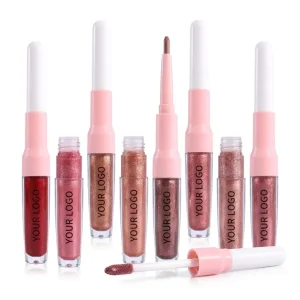
Bridging the gap between solid lipsticks and liquid lip oils, solid water-glow lip nectars utilize click-pen delivery systems. These thermal-melting formulas release micro-encapsulated hyaluronic acid and botanical oils upon lip friction, creating a 3D glass-like mirror effect without stickiness.
Skin-First Dual-Butter Care
Color cosmetics are increasingly expected to function as intensive lip treatments. Formulations featuring Shea Butter, Mango Seed Butter, Tri-Peptide plumping complexes, and Squalane provide active lip-barrier restoration while delivering rich, natural tint payoff.
Smart pH-Reactive Tinting
Custom self-adjusting lip stains contain Red 27 (CI 45410) dye technology dissolved in transparent polymer sticks or clear oil bases. Upon application, moisture and pH levels on the lips trigger a rapid reaction, yielding a personalized, long-wearing flush uniquely suited to the user's skin undertone.
Regional Consumer Profiles & Customization Frameworks
Adapting Textures, Shades, and Claims for Regional Consumer Preferences Around the World
North America & Western Europe
Consumer Driver: High-impact color payoff, full-coverage transfer-proof mattes, clean-beauty non-toxic claims, and eco-conscious refillable componentry.
ODM Customization Focus: Vegan wax matrices, silicone-free film formers, inclusive shade libraries spanning cool/warm deep nudes to vibrant reds, and FSC-certified paper secondary packaging.
Middle East & Gulf Cooperation Council (GCC)
Consumer Driver: Extreme heat-resistance, non-feathering performance, rich pigment density, and opulent metallic or velvet finishes.
ODM Customization Focus: Melting point stabilization up to 48°C, ultra-high pigment loading (up to 25%), Halal-certified ingredient sourcing, and heavy-weight luxe packaging with magnetic lock mechanisms.
Southeast Asia & Tropical Latitudes
Consumer Driver: High humidity resistance, lightweight non-greasy feel, breathable lip stains, and SPF protection.
ODM Customization Focus: Water-tint liquid formulas, featherlight gel-trap technology, non-sticky polymer networks, and integrated SPF20–SPF30 broad-spectrum UV filters.
East Asia (Japan, Korea, China / C-Beauty)
Consumer Driver: Soft-blur "velvet air" mud textures, glass-skin dewiness, subtle gradient stain capabilities, and skincare-infused formulas.
ODM Customization Focus: Bouncy elastomer mud matrices, ultra-fine micro-powders, botanical oil infusions, and sweet fruity or dessert-inspired scent profiles.
Complementary Private Label Cosmetic Catalog
Full-range color cosmetics manufacturing options to expand your brand's core product lineup.
OEM/ODM Procurement & Manufacturing FAQ
Key Commercial, Technical, and Logistical Insights for B2B Cosmetic Buyers
What is the difference between OEM, ODM, and OBM lip manufacturing services?
OEM (Original Equipment Manufacturer): You provide your own proprietary formula or precise product specifications, and our factory handles bulk compounding, filling, and packaging assembly under strict confidentiality.
ODM (Original Design Manufacturer): A full end-to-end service. You select from our library of 5,000+ mature, stability-tested formulas. We customize shade ranges, fragrances, active ingredients, and primary/secondary packaging tailored to your brand identity.
OBM (Original Brand Manufacturer): Turnkey, market-ready product solutions complete with pre-registered compliance dossiers and stock packaging, allowing for immediate market entry with minimal lead time.
What are the standard Minimum Order Quantities (MOQs) for lipstick and lip gloss?
MOQs depend primarily on component customization:
- Stock Packaging + Existing Formula Base: MOQs start as low as 3,000 to 5,000 units per shade.
- Custom Mold Packaging / Proprietary Formula R&D: MOQs typically start at 10,000 units per shade, governed by primary packaging supplier minimums for custom color matching or hot-stamping runs.
How do you ensure lip gloss formulas pass international heavy metal and microbial testing?
Every raw material batch undergoes incoming Quality Control (IQC) via Inductively Coupled Plasma Mass Spectrometry (ICP-MS) to confirm heavy metals (Lead, Arsenic, Mercury, Cadmium) fall well below FDA and EU thresholds. Finished bulk formulations undergo USP <61/62> microbial limit testing, ensuring zero presence of Staphylococcus aureus, Pseudomonas aeruginosa, or Candida albicans prior to high-speed cleanroom filling.
Can you formulate 100% Vegan, Clean-Beauty, and Cruelty-Free lip products?
Yes. Our laboratory specializes in clean-beauty formulation engineering. We replace beeswax and lanolin with synthetic beeswax, rice bran wax, and plant-derived berry waxes. Carmine (CI 75470) is replaced with synthetic iron oxides and certified organic lakes to ensure 100% vegan compliance. Our facility holds SEDEX ethical audits and strictly adheres to cruelty-free manufacturing protocols without animal testing.
What is the typical production timeline from initial inquiry to final shipment?
The standard timeline follows a structured 6-stage workflow:
- Phase 1: Formula Sample Matching & Benchmarking: 7 to 10 days.
- Phase 2: Accelerated Stability & Packaging Compatibility Testing: 14 to 28 days (conducted in parallel with artwork proofing).
- Phase 3: Component Manufacturing & Printing: 25 to 35 days.
- Phase 4: Bulk Compounding & High-Speed Cleanroom Filling: 10 to 15 days.
- Phase 5: Final Quality Assurance Clearance & Export Logistics: 5 to 7 days.
How do you prevent color shade fading and oil separation in liquid lipsticks?
We utilize surface-treated pigments (coated with Triethoxycaprylylsilane or Isopropyl Titanium Triisostearate) that disperse uniformly within the oil-silicone matrix. Added hydrophobic silica networks prevent sedimentation, while synergistic antioxidant complexes (Tocopherol and Ascorbyl Palmitate) prevent oxidation and shade shifting over a 36-month shelf life.
 Scan to add WeChat