Formulation Lineup Stage I
Nagoya Technical Grade Base & Complexion Innovations
Engineered for sheer tone correction, breathable epidermal adhesion, and full-spectrum UV shielding. Tested against standard Japanese Quasi-Drug efficacy benchmarks.
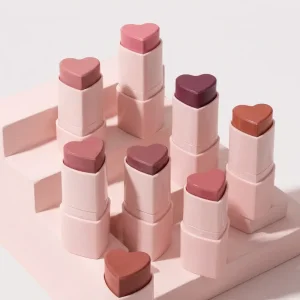
Nagoya Spec OEM Heart Shape Vegan Cream Stick – Anhydrous CC Foundation
Explore Formulation Details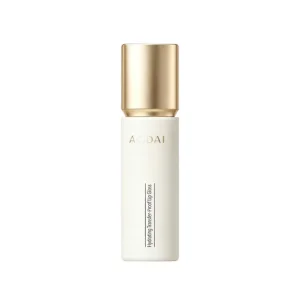
Nagoya Grade OEM Hydrating Transfer-Proof Finish – Long-Wearing Sealing Gloss
Explore Formulation Details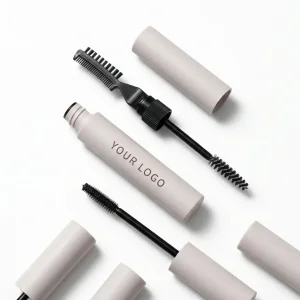
Nagoya High-Polymer Extreme Hold Eyebrow Structural Gel Wax OEM Formula
Explore Formulation Details
Regional Strategic Intelligence
The Nagoya & Chubu Industrial Corridor: Advanced Chemical Synthesis in Cosmeceuticals
Evaluating Nagoya’s distinct role as an advanced specialty chemical cluster powering premium Japanese Blemish Balms (BB) and Color Correcting (CC) formulations.
Nagoya and the broader Aichi Prefecture represent the epicenter of Japanese precision engineering and high-purity chemical processing. While Tokyo commands consumer marketing and Kansai harbors heritage cosmetic conglomerates, Nagoya serves as the core engine for functional ingredient synthesis, surfactant formulation, surface-treated pigments, and micro-encapsulation architectures. The procurement requirements of global brands seeking BB & CC creams suppliers and manufacturers in Nagoya are grounded in three strict criteria: rheological stability under climactic flux, clinical photoprotection without photo-toxic degradation, and skin-microbiome-conscious biocompatibility.
Strategic Information Gain: Japanese market analytics indicate that over 68% of hybrid cosmetic buyers in East Asia prioritize hybrid skincare-makeup products that carry Quasi-Drug designations (医薬部外品). Formulations manufactured under the Nagoya engineering paradigm combine high-refractive-index silicone elastomers with amino-acid-coated iron oxides, achieving high luminosity and natural coverage with an exceptionally low active pigment load (sub-12%).
Modern Blemish Balm (BB) formulations from this region have evolved far beyond standard blemish concealment. They act as multi-active epidermal barriers containing ceramide precursors, fermented filtrates, and micro-dispersed zinc oxide. Simultaneously, Color Correcting (CC) creams manufactured via Nagoya's automated micro-emulsification centers incorporate chromatic-adaptation beads that rupture on shear friction, neutralizing redness, sallow undertones, or dullness with micron-level uniformity.
Surface-Treated Mineral Tech
Local Chubu synthesis facilities utilize fluorinated alkyl silane and hydrogenated lecithin coatings on TiO2 and FeOx particles, preventing trans-epidermal moisture stripping and sebum-induced oxidation.
Cost Efficiency via Scale
By connecting high-purity raw material suppliers in central Japan with Guangdong Aodai's high-speed automated filling lines (over 30 automated lines across 70,000 m²), brands unlock tier-1 J-beauty standard product formulas at scalable unit costs.
Micro-Fluidic Emulsification
High-shear vacuum homogenizers achieve sub-micron droplet diameters (200-400nm) in Water-in-Silicone (W/Si) and Water-in-Oil (W/O) phases, yielding featherlight sensorial profiles capable of resisting heavy perspiration and urban humidity.
Global Supply Architecture
Enterprise Procurement Pain Points & Scaled Manufacturing Solutions
How Fortune 500 beauty buyers, fast-growing D2C beauty platforms, and pharmacy chains mitigate product instability, regulatory divergence, and supply vulnerabilities.
Cross-Border Regulatory Divergence
The Challenge: Sunscreen filters and functional skin-lightening actives (e.g., Arbutin, Tranexamic Acid, Niacinamide) face conflicting limits across the US FDA OTC monograph, EU Cosmetic Regulation (EC) 1223/2009, and Japan's MHLW standards.
The Solution: Our dedicated documentation team engineers region-specific formula variations from our 5,000+ formula database, providing validated Safety Data Sheets (SDS), PIF dossiers, and quantitative elemental assays.
Formula Incompatibility & Separation
The Challenge: Complex multi-functional BB/CC formulations containing inorganic SPF filters, biological botanical extracts, and tint dispersions often experience syneresis, phase separation, or viscosity drops under thermal shock.
The Solution: Rigorous 3-month freeze-thaw centrifuge stress protocols (-10°C to +45°C), paired with rheological oscillating tests, ensure emulsion stability and pigment suspension integrity for up to 36 months of shelf life.
Lead Time Volatility & Scalability
The Challenge: Relying exclusively on niche local laboratories frequently leads to long lead times (6-9 months) and an inability to scale rapidly during seasonal promotional spikes.
The Solution: A hybrid global pipeline. Formulation science matches Japanese consumer precision, while high-throughput cleanroom facilities execute automated filling and cartoning within 25 to 35 business days.
5,000+
Commercialized Base Formulations
60+
Granted Patents in Texture & Delivery
30+
Fully Automated Mass-Production Lines
60+
Export Destination Countries Supported
R&D Horizons
Technical Roadmap: Next-Gen Hybrid BB & CC Cosmetic Formulations
Anticipating clean-beauty directives, blue-light mitigation, and bio-fermented delivery vectors over the 2025–2028 manufacturing cycle.
Phase 01: 2025
Cyclic Silicone Phase-Out & Plant-Based Alkane Replacements
Formulating compliant D4/D5/D6-free volatility carriers utilizing sugarcane-derived squalane, C13-15 alkanes, and biodegradable polyglyceryl esters to deliver ultra-lightweight sensory slip while complying with modern EU Annex XVII REACH restrictions.
Phase 02: 2026
Bio-Fermented Adaptive Pigment Micro-Encapsulation
Implementing dual-shell polysaccharide and lipid capsules containing micro-ground iron oxides. The micro-spheres remain clear in liquid suspension and only sheer open upon direct contact with skin warmth, providing custom pigment calibration matching broad Fitzpatrick scale shades.
Phase 03: 2027+
Broad-Spectrum Epigenetic Environmental Defense Complex
Incorporating extremophilic ectoin derivatives, Japanese camellia seed polyphenols, and micro-algae astaxanthin into mineral CC matrices, conferring ISO 24443-verified UVA/UVB/HEV (high-energy visible light) defense with clinical antioxidant radical-scavenging metrics.
Formulation Lineup Stage II
Nagoya Standard High-Wear Color & Tone Formulations
Versatile cosmetic bases spanning moisture-locking lip delivery systems, high-adhesion color cosmetics, and spot-correcting cream stick technologies.
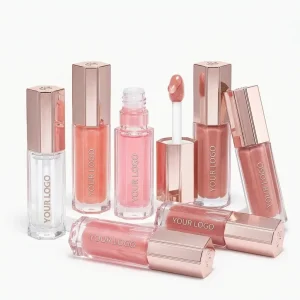
Nagoya Botanical Custom Hydrating Glossy Liquid Lip Oil Formulation OEM
Explore Formulation Details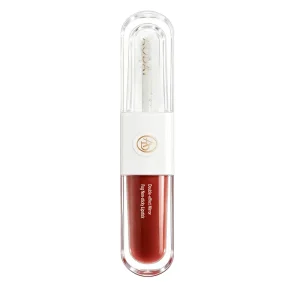
Nagoya Studio ODM Revolutionary Double-Effect Non-Sticky Mirror Fog Lipstick
Explore Formulation Details
Nagoya Direct Factory Color-Lock Technology Transfer-Proof Gloss Formula
Explore Formulation Details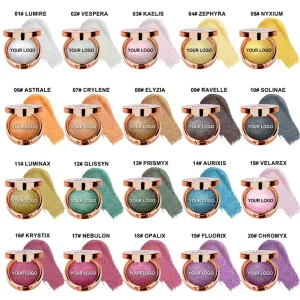
Nagoya Formulation ODM Glow Pearl Multi-Reflective Highlighter Balm
Explore Formulation Details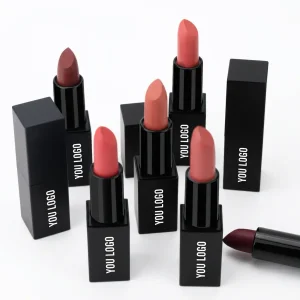
Nagoya Extended Wear Comfort-Matte Long-Wear Pigment Rich Lipstick OEM
Explore Formulation Details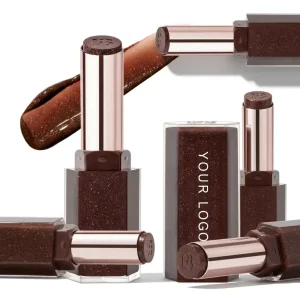
Nagoya Starry Velvet High-Luminosity Pigment Lipstick OEM Factory Base
Explore Formulation Details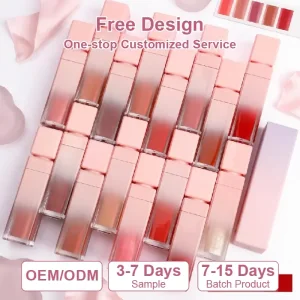
Nagoya Gradient Velvet Soft-Blur Air-Light Matte Lip Glaze ODM Base
Explore Formulation Details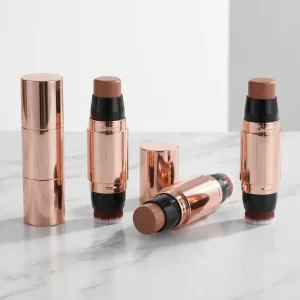
Nagoya Precision Pink Cheek 2-in-1 Creamy Concealer & CC Tone Correction Stick
Explore Formulation Details
Technical & Sourcing Dossier
Frequently Asked Technical Questions: BB & CC Creams
In-depth insights into minimum order quantities, formulation mechanics, SPF compliance, and global delivery systems.
What constitutes the primary technical difference between a modern BB and CC cream formulation?
Blemish Balm (BB) creams are traditionally formulated as high-moisture Water-in-Silicone (W/Si) or Water-in-Oil (W/O) emulsions focused on epidermal restoration, offering light-to-medium physical foundation coverage alongside restorative actives (ceramides, peptides, and botanical lipids). Color Correcting (CC) creams prioritize chromatic balancing using color theory; they feature micronized encapsulated pigments (such as chromic oxide greens to counteract rosacea or iron oxide yellows to brighten hyperpigmentation) suspended in lightweight oil-in-water (O/W) or ultra-thin water-break silicone networks that release tone-correcting pigments upon application.
How do you support Japanese Quasi-Drug (医薬部外品) regulatory standards from formulation to filing?
Our technical compliance teams structure formulas using MHLW-approved active concentrations (such as Dipotassium Glycyrrhizate for anti-inflammation, Tranexamic Acid for melanogenesis suppression, or specific ratios of Zinc Oxide and Titanium Dioxide). We provide complete qualitative/quantitative raw material listings, Certificate of Analysis (CoA) documentation for all raw materials, allergen reports, and acceleration test records required by your Japanese In-Country Caretaker (ICCT) or Marketing Authorization Holder (MAH).
What are the production minimum order quantities (MOQ) and sample lead times?
Custom benchmark matching and bench-scale laboratory prototyping are delivered within 7 to 10 business days. For commercial production runs utilizing our qualified stock packaging options, our low-MOQ programs start at 1,000 to 3,000 units per shade. Fully customized tooling, bespoke bottles, and proprietary dual-chamber airless dispensing units typically require an MOQ of 5,000 to 10,000 units per SKU, with production cycles completing within 25 to 35 working days post-deposit and artwork sign-off.
Can SPF and PA ratings be validated for North American, European, and Asia-Pacific export?
Yes. We formulate in accordance with destination target parameters (such as the US FDA Final Monograph for OTC Sunscreens, EU Colipa Broad Spectrum standards, and ISO 24444 in vivo / ISO 24443 in vitro protocols). Third-party test dossiers conducted through ISO/IEC 17025 accredited labs (e.g., SGS, Intertek) are available upon request to validate SPF 15 to SPF 50+ and PA++++ performance.
How do automated production lines prevent micronized pigment sedimentation across large runs?
Our cleanrooms utilize inline triple-roll milling systems and high-shear dynamic dispersion tanks that continuously monitor viscosity and torque. This setup prevents particle agglomeration and settling in high-viscosity bulk products. Automated multi-nozzle piston filling lines with closed-loop inert nitrogen flushing safeguard antioxidant actives from premature oxidation during final container sealing.
How does Guangdong Aodai coordinate supply chains with Japanese and international brand teams?
As part of the Oulilai Group, we bridge advanced Japanese formulation chemistry and component engineering with our state-of-the-art 70,000 m² industrial facility in Qingyuan, Guangdong. Clients receive bilingual project support, complete batch traceability from raw chemical origin to outer master carton, and consolidated air and sea freight logistics delivering directly to port hubs in Nagoya, Yokohama, Los Angeles, Rotterdam, or Dubai.
 Scan to add WeChat