Benchmark Lip Formulations Engineered for Melbourne Brands
Pre-validated clinical textures, micro-pigment dispersion technologies, and barrier-repair bases ready for private label customization and local regulatory filing.
Melbourne's Role as the Clean Beauty & Cosmeceutical Capital of the Southern Hemisphere
A rigorous examination of Victorian manufacturing infrastructure, climatic physiological demands, and global export supply chains.
The metropolitan region of Melbourne, Victoria, has emerged as the unchallenged intellectual and operational nucleus of Australasia's high-performance clean cosmetics sector. While Sydney maintains high transactional financial density, Melbourne’s southeastern industrial corridors—stretching from Port Melbourne through Braeside, Moorabbin, and Dandenong South—house Australia’s most concentrated networks of advanced cosmetic engineering facilities, cleanroom compounding centers, and analytical testing laboratories. Driven by a discerning local consumer base that commands botanical integrity alongside pharmaceutical efficacy, Melbourne manufacturers operate at the nexus of organic sustainability and bio-chemical rigor.
The Environmental Catalyst: Melbourne's Microclimate & Lip Physiology
Formulating an exceptional lip treatment for the Victorian market requires understanding an acute biological paradox: Melbourne's infamous "four seasons in one single day" weather volatility. Bordered by the Southern Ocean and dry inland continental air masses, Melbourne undergoes severe, rapid relative humidity drops (often plummeting from 75% to below 22% within hours), coupled with an extreme Antarctic-influenced ultraviolet radiation index (frequently peaking at UV Index 11+ in summer months).
The vermilion zone of human lips lacks both sebaceous glands and a stratified stratum corneum, rendering it uniquely vulnerable to rapid transepidermal water loss (TEWL) and photodamage. Standard lip balms formulated with non-polar mineral waxes simply create a static, occlusive plastic wrap that shears off during speech or mastication. In contrast, Melbourne-engineered lip balms utilize a bio-mimetic lipid bilayer matrix:
- Eutectic Wax Blending: Precisely mapped crystalline lattices utilizing vegan Candelilla, Sunflower seed wax, and Rice bran wax, preventing "blooming" and structural softening under Australian summer heatwaves up to 45°C.
- Physiological Lipid Replenishment: Micro-dispersed phytosterols, squalane from Australian olives, and bio-fermented ceramide NP that physically integrate into cellular interstitial spaces.
- Non-Nano Photoprotection: Photostable physical zinc oxide dispersions that provide AS/NZS 2604:2021 compliant broad-spectrum defense without white cast or chalky palatability issues.
Indigenous Australian Actives
Supercritical fluid CO2 extraction of Kakadu Plum (ascorbic acid content 100x higher than oranges), Finger Lime caviar cellular extracts, and Macadamia integrifolia seed oil for high-tier native positioning.
Zero-Waste Circular Packaging
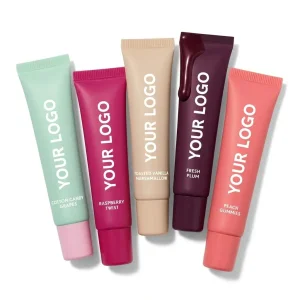
Aluminum monomaterial push-up mechanisms, 100% PCR PP tubes, and marine-biodegradable PHA polymer vessels tailored to satisfy Victoria's stringent Single-Use Plastics Bans and carbon disclosure audits.
Clinical-Grade Stability Profiling
Accelerated 12-week challenge testing protocols at 45°C with 75% RH, freeze-thaw thermal stress testing (-15°C to +50°C), and real-time centrifuge phase separation analysis guaranteeing 36-month shelf lives.
Turnkey Contract Manufacturing: From Melbourne Lab Brief to Retail Distribution
A closed-loop, GMP-certified operational methodology engineered to mitigate commercial risk, reduce compounding tolerances, and guarantee speed to market.
Molecular Architecture & Brief
Rheological requirement definition, target slip/melt curves, shade customization, fragrance profiling (allergen-free), and TGA/AICIS classification reviews.
Micro-Pilot Batching & Rheology
Lab compounding via high-shear vacuum homogenization, texture penetrometer testing, stability cycling, and pilot mold thermal contraction calibrations.
Automated Cryogenic Molding
Scale manufacturing across multi-axis automated lines. Hot-fill precision dosing (+/- 0.05g) linked directly to computer-controlled cryogenic cooling tunnels.
Analytical Release & Logistics
Microbial challenge assay clearance, heavy metal ICP-MS screening, primary component torque-testing, and certified export documentation issuance.
Cryogenic Split-Mold vs. Direct-Filling Technology: Factory Operations
A frequent operational failure point in small-scale lip balm fabrication is surface cratering, central pinholing, and uneven wax crystallization. In our manufacturing facilities serving Melbourne and international brand partners, we utilize two distinct industrial filling technologies:
1. Direct Hot-Pour Under Laminar Flow: Used primarily for squeeze-tubes and aluminum jars. The bulk wax-oil emulsion is maintained at an exacting +/- 0.5°C equilibrium within jacketed 316L stainless steel holding tanks. Automated volumetric nozzles dispense the formulation at low velocity to prevent air entrapment. The containers immediately enter multi-stage convective cooling chambers with progressive zone cooling to establish a flawless, glass-like meniscus.
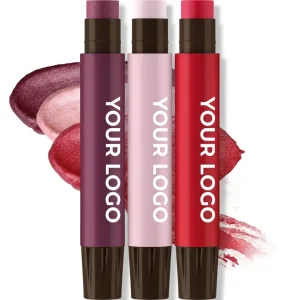
2. Cryogenic Silicone-Molded Bullet Stripping: Required for ultra-premium bullet lip balms and contour shapes. The molten matrix is injected into medical-grade fluoropolymer or silicone molds chilled to -12°C. Rapid thermal quenching forces microscopic fat crystals into a dense, amorphous beta-prime crystalline state. This produces extreme mechanical tensile strength (preventing bullet snap in transit) and provides an immediate, velvety glide across the lips without requiring heavy synthetic silicone oils.
Navigating TGA, AICIS, MoCRA & EU Compliance from Victoria
Comprehensive regulatory engineering safeguarding enterprise beauty brands against international border hold-ups, chemical infractions, and mislabeling liabilities.
In the Australian market, the boundary between a standard cosmetic lip balm and a therapeutic good is strictly codified under the Therapeutic Goods Administration (TGA) regulations and the Australian Industrial Chemicals Introduction Scheme (AICIS). Operating a global beauty brand from Melbourne requires an OEM/ODM partner with deep, systemic familiarity with these legal boundaries:
Cosmetic Lip Balm (AICIS Regulated)
Formulations designed solely to moisturize, condition, tint, or protect healthy lips from general environmental drying without explicit medicinal, therapeutic, or high-SPF primary claims. All chemical ingredients must appear on the Australian Inventory of Industrial Chemicals (AIIC) or qualify under defined introduction categories with full ecotoxicological dossiers.
Primary Sunscreen Balm (TGA Aust L)
Balms promoted with SPF ratings higher than 15, or making specific UV protection claims beyond secondary incidental use. These products require full Good Manufacturing Practice (GMP) license oversight, validation through independent human ISO 24444 in-vivo testing, and listing on the Australian Register of Therapeutic Goods (ARTG).
International Cross-Dossier Harmonization
For Melbourne brands expanding into North America, the UK, Europe, or the ASEAN economic zone, our laboratory provides complete Technical Product Dossiers: EU PIF (Product Information Files) signed by certified Euro-toxicologists, US FDA MoCRA compound listings, and IFRA-conformity certificates for all botanical aromatics.
Every production run at our manufacturing campus is governed by ISO 22716:2007 (Cosmetics GMP) and ISO 9001 quality management standards. Full-chain ingredient traceability is anchored by digital lot tracking, guaranteeing that whether a brand sources Victorian macadamia oil or European bio-peptides, batch records can be retrieved within minutes during international customs audits.
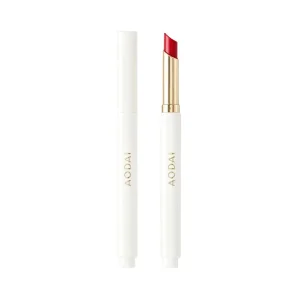
High-Performance Hybrid Lip, Sunscreen & Base Formulations
Expand your Melbourne brand's catalog with proven OEM/ODM formulations designed for cross-category synergy and clean beauty market validation.
Enterprise Sourcing & Formulation FAQ for Melbourne Brands
In-depth responses covering minimum order thresholds, chemical compliance, thermal stability engineering, and private label timelines.
What are the minimum order quantities (MOQs) for custom lip balm runs?
For brands utilizing our pre-validated formula library and standard tooling (stock components such as standard 4.5g tubes, squeeze tubes, or aluminum pots), our baseline MOQ starts at 3,000 to 5,000 units per shade/flavor. For bespoke molecular formulation development (custom texture matching, specific native extract complexes) or custom injection-molded packaging tooling, production runs generally commence at 10,000 units to maintain compounding and filling efficiency.
How does the lab prevent lip balms from melting in Australian summer logistics?
Domestic freight within Australia often subjects cosmetic cargo to container temperatures exceeding 50°C. We conduct differential scanning calorimetry (DSC) to establish precise thermal transition curves. By engineering a high-melting network utilizing branched vegan waxes (such as Rhus Verniciflua peel cera or hydrogenated jojoba esters) alongside short-chain triglycerides, the formulation retains dimensional rigidity up to 48°C while maintaining an instant body-heat melt point (34°C to 36°C) upon lip contact.
When does a lip balm require TGA listing versus standard AICIS notification?
Under the Australian Therapeutic Goods (Excluded Goods) Determination, a lip product is considered a non-therapeutic cosmetic if its primary purpose is lip appearance, tinting, or general hydration. If the product includes an SPF rating up to SPF 15 that is secondary to a cosmetic claim, it remains classified as a cosmetic regulated under AICIS. If the product is marketed primarily as a protective sunscreen or claims an SPF above 15, it must be formulated within an authorized TGA-licensed facility and listed on the ARTG.
Can we incorporate Australian native botanicals with organic certifications?
Yes. We routinely incorporate ethically wild-harvested or organically cultivated native botanical oils and CO2 cellular extracts into our lip formulations. Popular options include Kakadu plum (Terminalia ferdinandiana), Davidson plum, Desert lime, and Tasmanian blue gum honey extracts. We provide full certificates of analysis (CoA), organic traceability documentation, and safety data sheets (SDS) meeting ACO (Australian Certified Organic) and COSMOS standard benchmarks.
What is the standard product development timeline from brief to dispatch?
A standard OEM project leveraging pre-approved formulations can achieve finished commercial production in 6 to 8 weeks following artwork approval. For custom ODM projects requiring de-novo formulation R&D, benchmark texture replication, 12-week accelerated stability and preservative efficacy testing (PET), lead times typically range from 14 to 18 weeks. Fast-track sampling cycles deliver initial bench prototypes to your Melbourne studio within 7 to 10 working days.
How do you test lip balms for safety, heavy metals, and stability?
Because lip cosmetics are subject to inevitable ingestion, chemical safety margins must be significantly higher than those applied to general skincare. Every master batch undergoes testing for heavy metals (lead, arsenic, cadmium, mercury) via Inductively Coupled Plasma Mass Spectrometry (ICP-MS) to parts-per-billion tolerances. Microbiological testing adheres to ISO 17516 standards, and thermal stability is verified across three distinct climate chambers: 4°C, 25°C/60% RH, and 45°C/75% RH.
Scale Your Custom Lip Product Line Today
Partner with an industry-leading contract cosmetic manufacturer equipped with 60+ patents, 30+ automated cleanroom lines, and dedicated formulation chemists ready to optimize your product for Melbourne and global shelves.
 Scan to add WeChat