
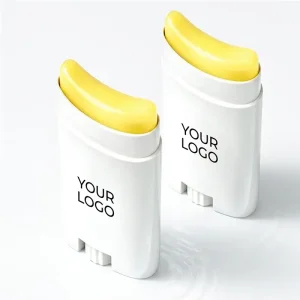
Osaka-Formulated Instant-Rinse Light Milk Cleansing Stick (OEM/ODM)
Solid-to-milk lipid formulation engineered for zero friction, high-polar wax dispersion, and instantaneous aqueous emulsification.
Explore Formulation SpecsProduction-ready bases developed under rigorous phase-stability testing and skin barrier protection benchmarks, engineered for rapid commercial deployment.
Solid-to-milk lipid formulation engineered for zero friction, high-polar wax dispersion, and instantaneous aqueous emulsification.
Explore Formulation Specs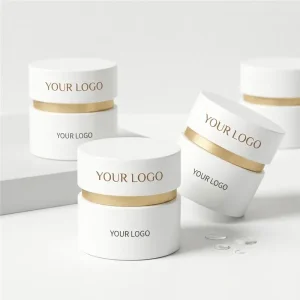
Aerated thixotropic oleogel that collapses upon skin temperature contact, effortlessly dissolving transfer-proof silicones.
Explore Formulation Specs
Bicontinuous surfactant blend using botanical polyglyceryl esters for rapid rinseability without leaving an occlusive lipid film.
Explore Formulation Specs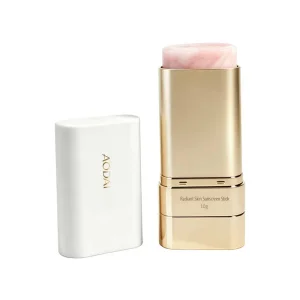
Dual-action photostable UV barrier system, specifically formulated to pair seamlessly with surfactant-based cleansing protocols.
Explore Formulation SpecsIn the global landscape of cosmetic manufacturing, Osaka occupies a unique and irreplaceable position. Often overshadowed by the consumer-facing branding hubs of Tokyo, the Kansai region—with Osaka as its epicenter—functions as the empirical engine of Japan’s chemical and pharmaceutical synthesis. The city's cosmetic heritage is intrinsically tied to Doshomachi (道修町), a district recognized since the Edo period as the pharmaceutical clearinghouse of Japan. Over four centuries, this historical trading district evolved into a concentrated corridor of fine chemical laboratories, surfactant engineers, botanical extract synthesizers, and contract manufacturing organizations (CMOs).
Today, OEM makeup remover suppliers in Osaka benefit from an integrated, hyper-localized supply chain. Within a 50-kilometer radius spanning Osaka Bay, Sakai, Toyonaka, and Yao, factories maintain immediate access to tier-one chemical developers specializing in ethoxylated and non-ethoxylated polyols, sugar-derived esters, and fermented plant lipids. This tight geographic clustering mitigates supply chain friction, allows for real-time rheological adjustments during pilot runs, and fosters deep collaborative research between university chemistry faculties and industrial production plants.
Furthermore, the logistics architecture of the Port of Osaka and nearby Kansai International Airport (KIX) provides an unmatched gateway for export-bound global prestige brands. Whether shipping bulk intermediates across the Pacific or air-freighting pilot units to retail partners in North America and Western Europe, Osaka-based contract manufacturers provide seamless cold-chain control, customs bonded storage, and automated material handling that comply with the strictest Good Manufacturing Practices (GMP).
Cosmetic factories in Osaka inherit stringent pharmaceutical cleanroom standards, keeping microbial count thresholds strictly below 10 CFU/g—far exceeding standard cosmetic thresholds.
Direct maritime container shipping and ambient-monitored air freight direct from Osaka Bay ensure formulation stability during cross-border transit to global markets.
Osaka’s polymer chemists produce proprietary silicone-free sensory modifiers and bio-ester alternatives, granting contract buyers unique intellectual property moats.
The historical Achilles' heel of color cosmetic removal has been the physiological tradeoff between solubilization efficacy and stratum corneum disruption. High-performance, waterproof cosmetics rely on cross-linked organosiloxanes (such as trimethylsiloxysilicate), acrylates, and hydrophobic pigments designed specifically to resist ambient sebum and moisture. Conventional makeup removers overcome this barrier using aggressive non-polar solvents or high concentrations of short-chain ethoxylated surfactants, which inevitably strip intercellular lipids, destabilize ceramides, and induce trans-epidermal water loss (TEWL).
Osaka's OEM formulation specialists solve this equation through advanced Bicontinuous Micro-Emulsion and Phase-Inversion Temperature (PIT) technologies. Rather than relying on simple micellar encapsulation, Osaka laboratories engineer self-assembling surfactant systems. In these formulations, the polar and non-polar domains co-exist in dynamic, sponge-like equilibrium:
Upon initial application to dry skin, the hydrophobic continuous channels of the formulation instantaneously dissolve long-wear film formers, silicones, and waxes with zero physical shear required, protecting the stratum corneum from mechanical irritation.
The introduction of rinse water triggers an instantaneous structural inversion from a bicontinuous phase into an ultra-low droplet size O/W (oil-in-water) nano-emulsion. Osaka-engineered polyglyceryl esters drop interfacial tension to near-zero levels.
All dissolved pigments and suspended particulate matter rinse completely free without requiring secondary harsh foaming surfactants, leaving the skin's endogenous lipid envelope structurally unaltered.
Beyond traditional liquid oils and micellar biphasics, Osaka factories lead global innovation in solid-state waterless mechanics. The development of cleansing sticks and whipped, melting "mashed-potato" balms requires master-level crystallization control. By balancing high-melting-point vegetal waxes (such as rice bran wax and candelilla) with low-viscosity plant-derived squalane and polar hemisqualane, Osaka manufacturing engineers construct crystalline networks that remain rigid and temperature-stable up to 48°C in packaging, yet undergo instantaneous shear-thinning thixotropic breakdown under 32°C fingertip friction.
The global makeup remover market is undergoing an unprecedented structural pivot. Today's beauty consumer is hyper-informed; consumers cross-examine ingredient decks via cosmetic analysis apps and demand verifiable barrier-repair claims even from wash-off formats. Simultaneously, regulatory frameworks across major continents are diverging sharply. The European Union continues to tighten restrictions under REACH regarding cyclic silicones (D4, D5, D6) and microplastics, while the United States enforces rigorous facility reporting, safety substantiation, and allergen transparency under the Modernization of Cosmetics Regulation Act (MoCRA).
In this complex global landscape, brand founders and enterprise procurement directors face a dual challenge: they require the ultra-prestigious formulation pedigree, R&D precision, and safety certifications synonymous with Japanese development, yet they must also satisfy competitive retail price points, rapid trend cycles, and high-volume scalability.
This hybrid value chain empowers brands to execute dual-sourcing architectures. Core formulations, benchmark reverse engineering, and clinical stability verification are executed according to strict Osaka laboratory protocols. Mass secondary packaging, high-speed automated filling, and multi-market export labeling are coordinated across high-capacity hubs. The result is a resilient supply network that eliminates single-point-of-failure vulnerabilities, shortens time-to-market by up to 35%, and maintains bulletproof regulatory audit trails across the PMDA, US FDA, and EU CPNP portals.
Navigating the Japanese regulatory environment represents the apex of global cosmetic compliance. The Japanese Ministry of Health, Labour and Welfare (MHLW), administered via the Pharmaceuticals and Medical Devices Agency (PMDA), maintains one of the world's most protective consumer safety regimes under the Yakuji-ho (Pharmaceutical and Medical Device Act).
For brands operating in or sourcing from Osaka, contract manufacturers provide crucial classification navigation between two distinct legal categories:
Requires compliance with the positive and negative ingredient lists (Standards for Cosmetics). Formulations emphasize sensorial elegance, instantaneous makeup dissolution, barrier conditioning, and pure clean-rinsing performance.
Intermediate class between cosmetics and pharmaceuticals. Formulated with verified active ingredients—such as Dipotassium Glycyrrhizate (anti-inflammatory) or Isopropyl Methylphenol (anti-microbial) to treat acne-prone or reactive barrier skin.
Full Safety Assessment dossiers (CPSR), PIF file creation for the EU CPNP, heavy-metal ICP-MS assays, and US FDA MoCRA registration materials are integrated into batch release documentation.
Qualified Osaka OEM facilities do not simply formulate; they validate every batch against stringent stability and ocular safety parameters. The cleansing testing suite includes:
Formulation performance is directly contingent upon the consumer's real-world behavioral environment. An effective OEM partner designs textures that respond to specific lifestyle demands, climatic conditions, and application rituals:
Engineered for high-density metropolitan living where skin is exposed to micro-pollutants (PM2.5) and smog. The initial oil/balm phase binds hydrophobic particulate matter, while the rinse phase completely sweeps pollutants out of follicular pores.
Formulated for hypersensitive skin barriers following chemical peels, laser sessions, or seasonal dermatitis. Features self-emulsifying, zero-rub textures with bio-compatible ceramides and squalane that rinse clean without cotton pad friction.
Catering to active consumers demanding leak-proof, TSA-compliant solid cleansing sticks and pocket-sized whipped balms. Stable under extreme cabin pressure shifts and fluctuating baggage hold temperatures.
As the cosmetic contract manufacturing landscape advances, Osaka's research institutions and engineering factories are establishing next-generation formulation paradigms driven by green chemistry and molecular computing:
Phasing out petrochemical-derived PEGs in favor of sophorolipids and rhamnolipids produced via precision yeast fermentation. These bio-surfactants exhibit ultra-low Critical Micelle Concentration (CMC), superior dermatological compatibility, and 100% aerobic biodegradability in aquatic ecosystems.
Integrating lipid nanoparticles (LNPs) inside wash-off formulas that selectively deposit bio-identical phytosterols, ceramides (NP, AP, EOP), and fatty acids into compromised intercellular lipid matrices during the 60-second emulsification window.
Deploying machine-learning algorithmic models to calculate phase equilibria and thixotropic indexes prior to physical synthesis. Cold-emulsification technology eliminates thermal heating cycles during production, cutting carbon emissions by 45% per finished metric ton.
Clear, unhedged technical answers regarding MOQs, regulatory pathways, stability protocols, and private label execution.
Complete your beauty brand ecosystem with high-performance formulas engineered to dissolve flawlessly under our makeup remover protocols.
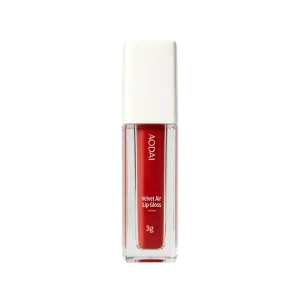
Weightless elastomeric lip lacquer engineered for plush, non-sticky wear and effortless single-swipe makeup removal.
Explore Formulation Specs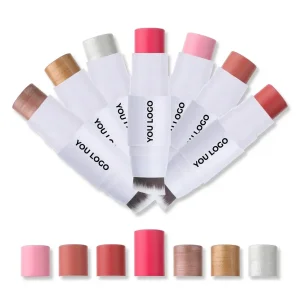
Multi-use luminous cream stick featuring high-purity synthetic fluorphlogopite and barrier-friendly botanical esters.
Explore Formulation Specs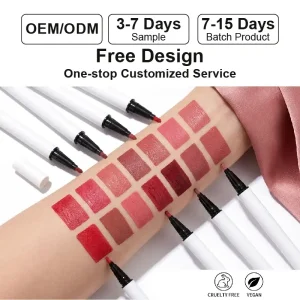
Ultra-fine liquid delivery system with film-forming acrylates, tested for crisp precision and clean oil-phase dissolution.
Explore Formulation Specs
High-shine polymer complex that locks pigment onto lips without transfer, yet releases instantly under oil cleansing.
Explore Formulation Specs
Encapsulated pigment emulsion that self-adjusts to skin undertones while maintaining breathable pore integrity.
Explore Formulation Specs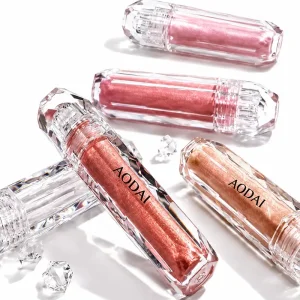
Quick-setting pearlescent eye fluid providing 16-hour crease-free wear, removable without vigorous eyelid tugging.
Explore Formulation Specs
All-over liquid glow illuminator infused with multi-dimensional pearls and non-comedogenic hydration factors.
Explore Formulation Specs
High-load pigment dispersion offering clinical blemish camouflaging without settling into fine dermal lines.
Explore Formulation Specs Scan to add WeChat